
Nanoparticle Emissions of Internal Combustion Engines: From Retrospective to Outlook
DOI:
https://doi.org/10.2533/chimia.2026.29Keywords:
Filter technology, Nanofiltration, Particle number emissions, Ultrafine particles, Virus filtrationAbstract
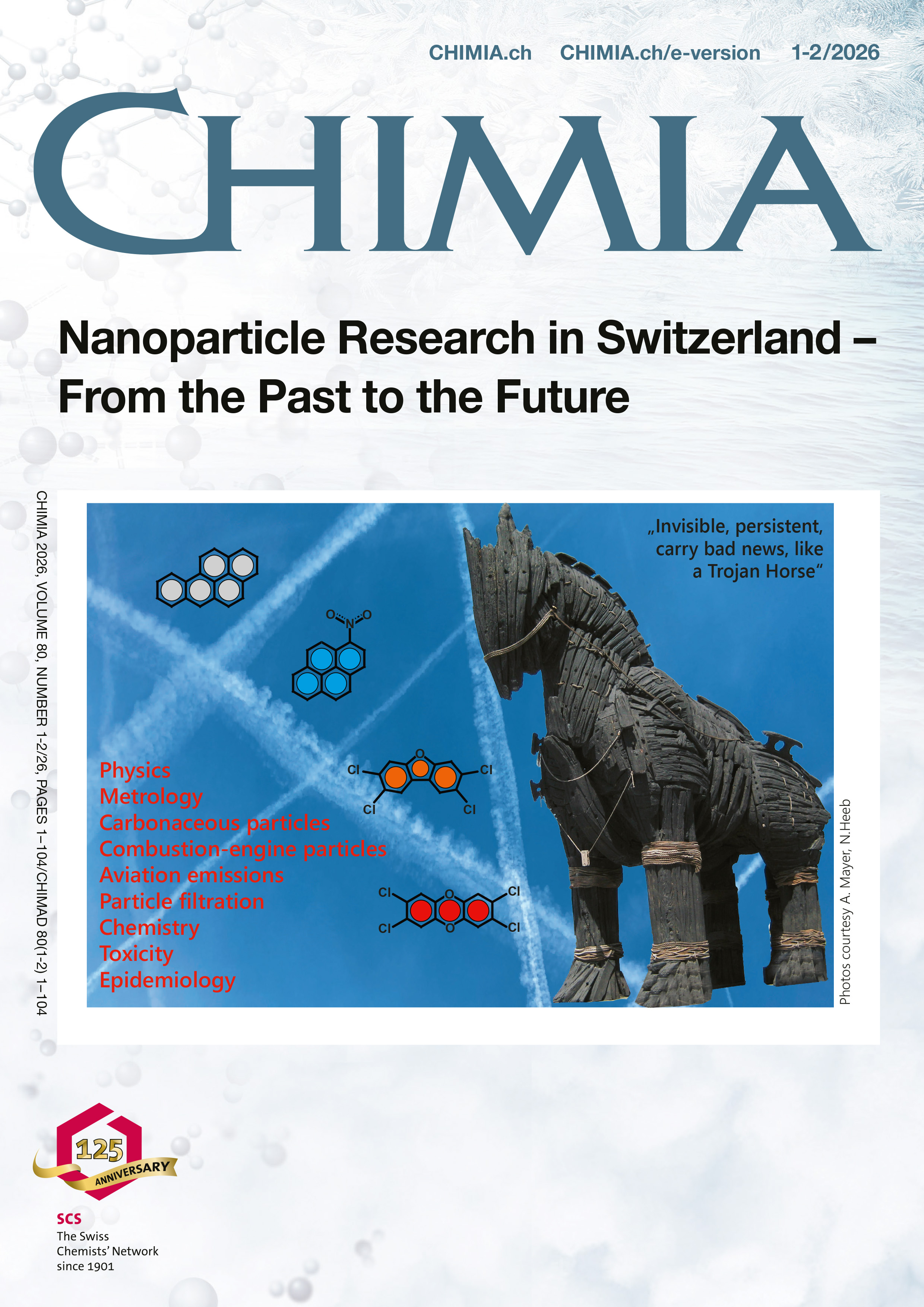
Nanoparticles (NP) in the sub-micrometer measuring range are invisible. NPs from combustion processes, consisting of carbon, metal and ash nuclei and organic substances, enter the human organism through the olfactory nerves and lungs, where they can have various effects (toxic, carcinogenic, mutagenic), some of which are long-lasting (chronic). These invisible nanoparticles were identified in the second half of the last century. Since then, a great deal of research has been carried out in various fields, and nanofiltration has demonstrated and realised ways of efficiently removing nanoparticles. The greatest progress has been made in the aftertreatment of exhaust gases from combustion engines. Nevertheless, further efforts are needed here, as in other areas such as indoor and outdoor air pollution control. The authors have been involved in important stages of these developments and, in this article, they attempt to provide a brief review and a desirable outlook, along with a few examples. In summary, it can be said that all types of engines and numerous other anthropogenic sources emit harmful nanoaerosols. During the pandemic, it was proven that nanofiltration used for exhaust gas aftertreatment in engines effectively eliminates bio-nanoaerosols, i.e. viruses and larger pathogens such as bacteria, fungi, allergens and others. We are all constantly surrounded and permeated by nanoaerosols and must live in symbiosis with them. It is therefore advisable for society to gain a better understanding of this issue, take it seriously and be even more concerned about the quality of the air surrounding the general population.
Downloads
Published
Issue
Section
License
Copyright (c) 2026 Jan Czerwinski, Danilo Engelmann, Andreas Mayer, Thomas Lutz, Lauretta Rubino

This work is licensed under a Creative Commons Attribution 4.0 International License.