
Chemistry of Combustion-generated Nanoparticles and their Transformation in Particle Filters
DOI:
https://doi.org/10.2533/chimia.2026.51Keywords:
AhR-mediated transport, Aryl hydrocarbon receptor, Chemical analysis, Genotoxicity of adsorbates, Trojan Horse effectAbstract
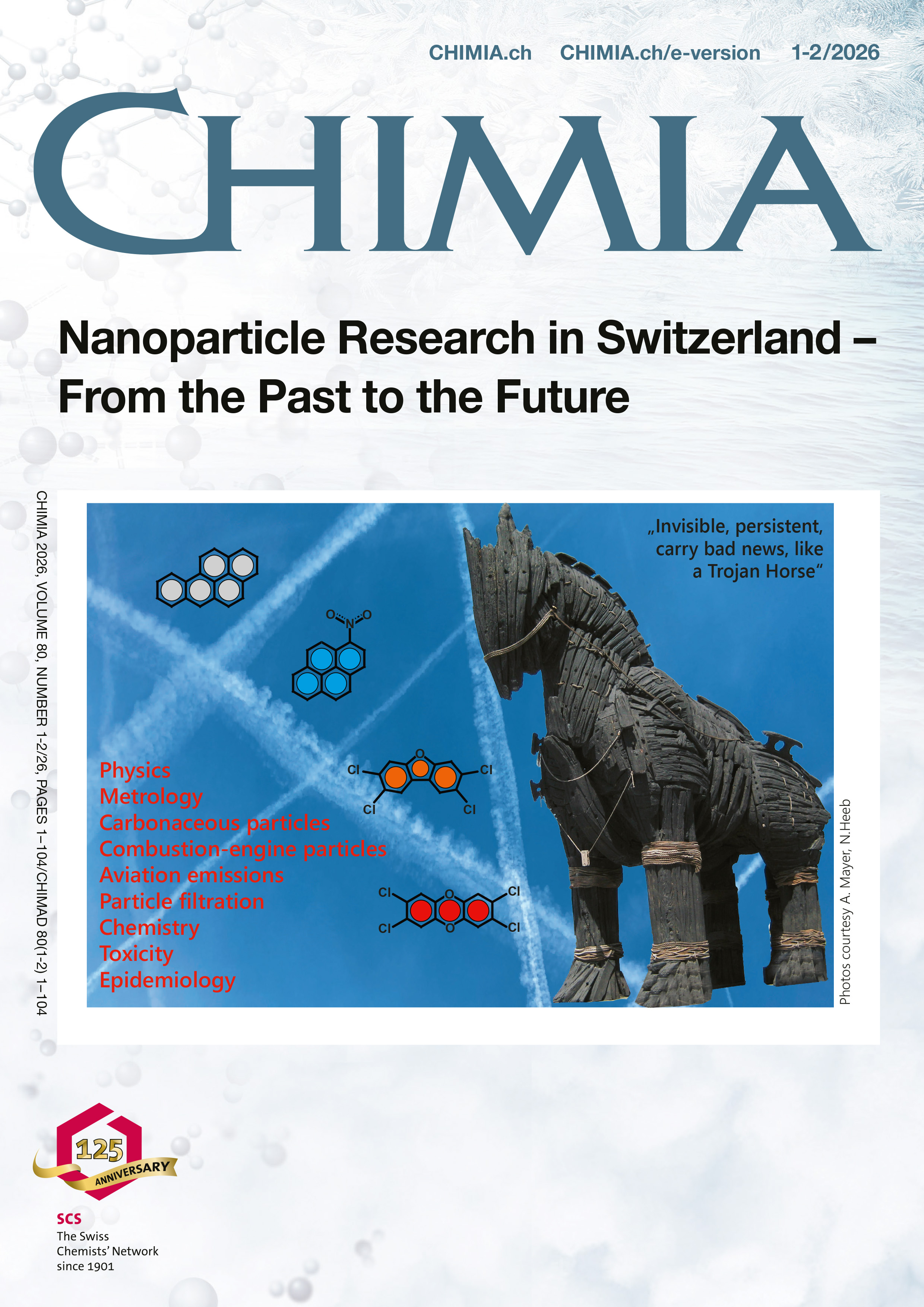
Combustion-generated nanoparticles with diameters of 10-200 nm are ideal shuttles to transport compounds into the human body. The so-called Trojan Horse effect describes the translocation of persistent nanoparticles covered with adsorbates across the alveolar membrane of the lung to the blood circulation system and further to other organs. The toxicology of such nanoparticles is determined by the chemical nature of their adsorbates. We determined the genotoxic potential of such nanoparticles and quantified levels of carcinogens and mutagens like polycyclic aromatic hydrocarbons (PAHs), nitro-PAHs, polychlorinated dibenzodioxins (PCDDs) and furans (PCDFs) in diesel, gasoline and jet engine exhausts. We studied the impact of catalytic particle filters on these compounds which can bind to the aryl-hydrocarbon receptor (AhR), an important domain of a human transcription factor reaching the cell nucleus, where it interferes with gene transcription and regulation.
Downloads
Published
Issue
Section
License
Copyright (c) 2026 Norbert Heeb, Joachim Mohn, Adrian Wichser, Markus Zennegg, Kerstin Zeyer

This work is licensed under a Creative Commons Attribution 4.0 International License.