
Airborne Nanoparticles and Human Health: Toxicological Insights with a Focus on Inhalation Exposure and Mechanisms of Toxicity During Pregnancy
DOI:
https://doi.org/10.2533/chimia.2026.57Keywords:
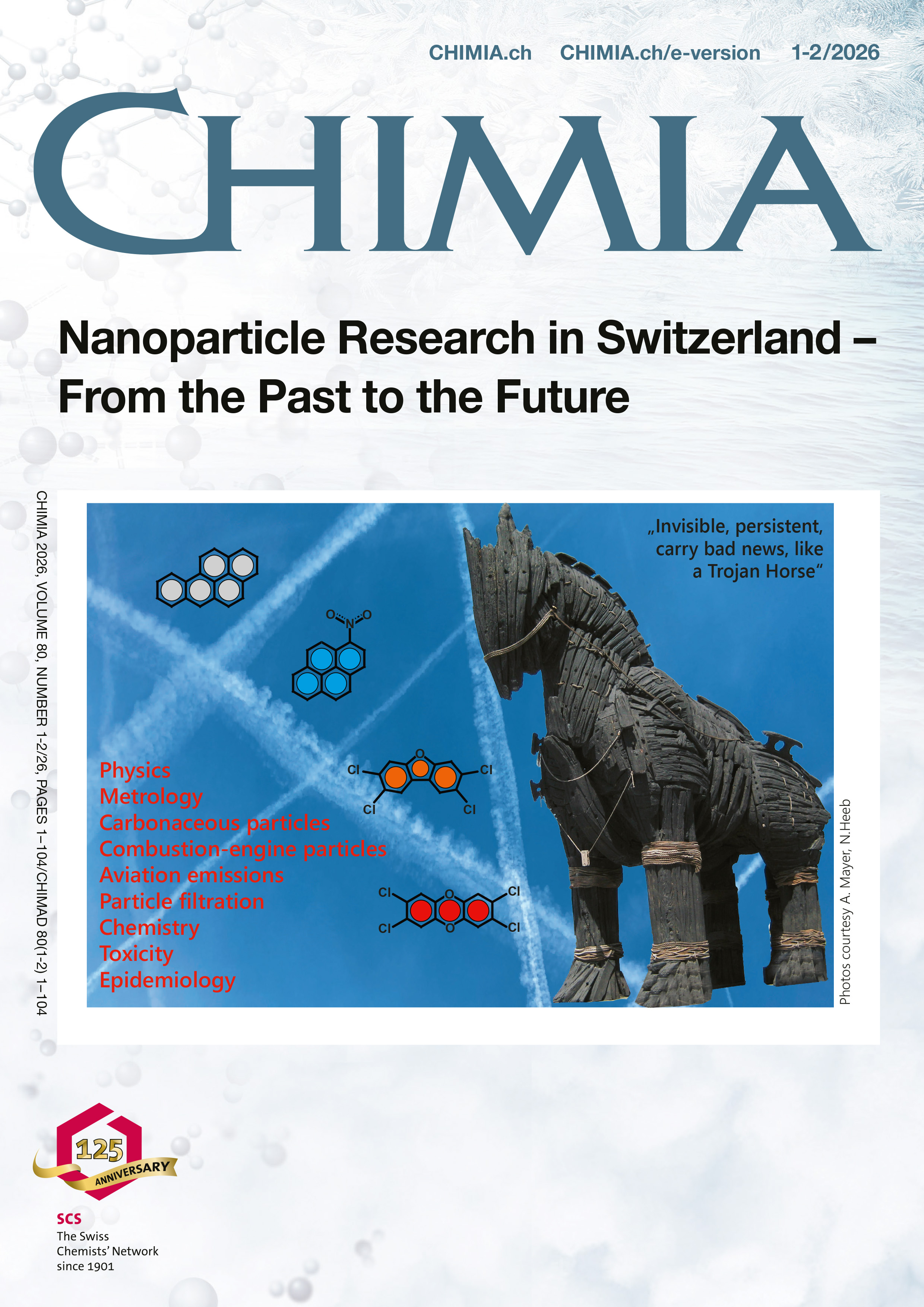
Biological barriers, Engineered nanoparticles, Nanoparticle toxicology, Particulate matter, Trojan Horse effectAbstract
Air pollution, particularly from airborne particulate matter (PM), is a major global health challenge and a leading cause of premature death. In this perspective, we provide an overview of human exposure routes to airborne PM and engineered nanoparticles, their subsequent translocation across biological barriers, and their biological effects within barrier tissues and beyond with a focus on the pulmonary and placental barrier. Emphasis is placed on direct versus indirect toxicity mechanisms in the absence of barrier crossing as well as on the ‘Trojan Horse effect’ that can enhance toxicity. Based on the current state of research, we outline critical knowledge gaps and highlight selected research efforts with Swiss participation that seeks to address these challenges. Collectively, these efforts will contribute to advancing risk assessment frameworks, informing regulatory policy, and ultimately reducing the global health burden of particle exposure.
Funding data
-
HORIZON EUROPE Framework Programme
Grant numbers 101156622 -
Staatssekretariat für Bildung, Forschung und Innovation
Grant numbers 25.00057 -
Schweizerischer Nationalfonds zur Förderung der Wissenschaftlichen Forschung
Grant numbers 10.004.175
Downloads
Published
Issue
Section
License
Copyright (c) 2026 Ceryl J. Y. Koh, Sina Ruhstaller, Emma Westenberg, Loretta Müller, Tina Buerki-Thurnherr

This work is licensed under a Creative Commons Attribution 4.0 International License.